
Understanding Modern Elevators: Innovations and Insights
Elevators are an essential part of modern buildings, enabling people and goods to move quickly and safely between floors. From residential apartments to commercial towers and hospitals, elevators play a crucial role in improving accessibility and efficiency. Over the years, elevator technology has evolved significantly, incorporating advanced engineering, automation, and safety systems. Understanding how elevators work helps building owners and users appreciate the complex technology that ensures smooth and reliable vertical transportation.
The Basics of Elevator Working Principles
The basic working principle of an elevator involves lifting and lowering a cabin (elevator car) inside a vertical shaft. This movement is powered by a motor system that pulls the elevator car using cables, pistons, or mechanical drives depending on the elevator type.
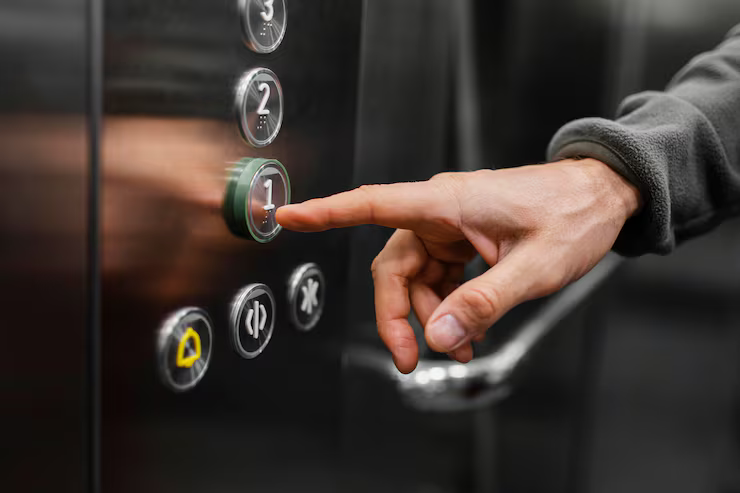
When a passenger presses a button, the elevator control system receives the request and sends a signal to the motor. The motor then moves the elevator car up or down along guide rails. At the same time, sensors and computerized controls monitor speed, weight, and door operations to ensure smooth and safe travel.
Most modern elevators also include a counterweight system that balances the elevator car. This reduces the amount of energy required to move the lift and improves overall efficiency.
What are the Fundamental Components of An Elevator?
An elevator system consists of several important components that work together to provide safe and efficient operation.
Elevator Car (Cabin)
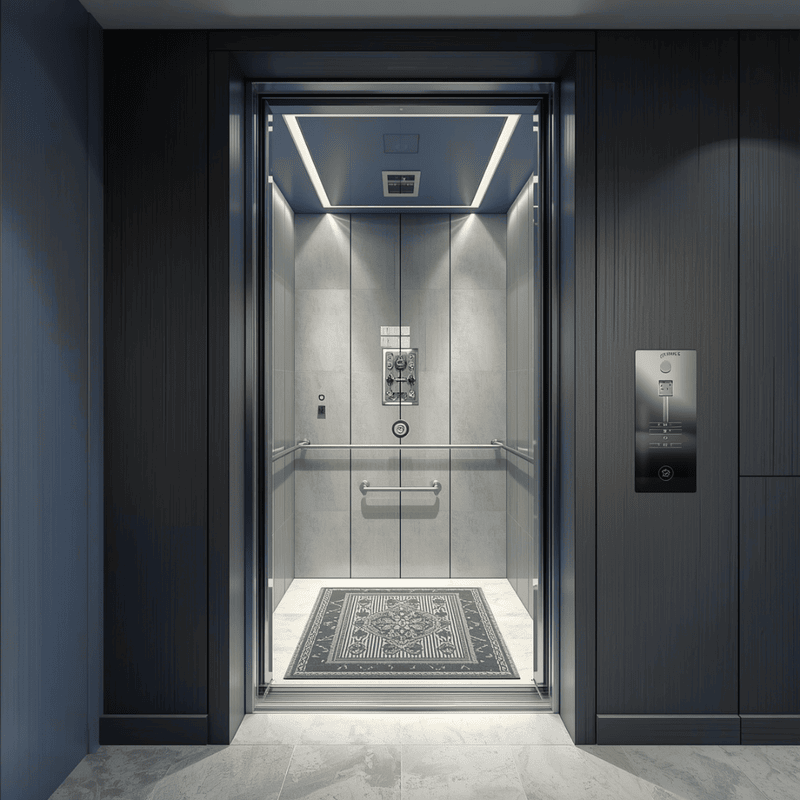
The elevator car is the compartment that carries passengers or goods. It is designed with safety features, control panels, lighting, and ventilation.
Guide Rails
Guide rails are metal tracks installed inside the elevator shaft. They guide the elevator car during its movement and prevent it from swaying.
Motor and Drive System
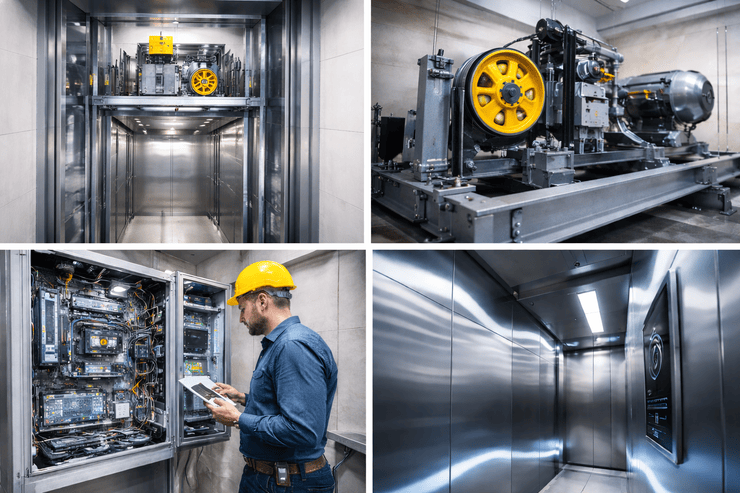
The motor powers the elevator’s movement. Depending on the elevator type, it may operate with traction cables, hydraulic pistons, or mechanical screw systems.
Counterweight
The counterweight balances the weight of the elevator car and passengers, reducing the workload on the motor and improving energy efficiency.
Control System
Modern elevators use computerized control systems to manage floor selection, speed regulation, door operations, and safety monitoring.
Safety Systems
Elevators are equipped with multiple safety devices such as emergency brakes, overload sensors, and alarm systems to ensure passenger safety.
Types of Elevators
Different buildings require different elevator systems based on factors like height, space, and usage. The most common types include hydraulic lifts, traction lifts, and screw-driven lifts.
Hydraulic Lifts
Hydraulic elevators are commonly used in low-rise buildings such as residential complexes, small offices, and hospitals.
Hydraulic lifts operate using a hydraulic piston system. A pump pushes hydraulic fluid into a cylinder, which moves a piston upward and lifts the elevator car. When the elevator needs to descend, the hydraulic fluid is slowly released, allowing the car to lower smoothly.
Hydraulic elevators are known for their quiet operation and simple design. They do not require overhead machinery, making them suitable for buildings with limited space.
Traction Lifts
Traction elevators are the most widely used elevators in high-rise buildings and commercial towers.
Working Principle:
Traction elevators use steel ropes or cables that pass over a pulley connected to a motor. One end of the rope is attached to the elevator car, while the other end is connected to a counterweight. When the motor rotates the pulley, the elevator moves up or down.
The counterweight balances the load, reducing the energy required for movement. Traction elevators are faster, more efficient, and suitable for tall buildings.
Screw-Driven Lifts
Screw-driven elevators are commonly used in residential buildings, home elevators, and small commercial spaces.
Working Principle:
These elevators operate using a rotating threaded screw and a matching nut attached to the elevator car. When the screw rotates, the nut moves along the screw, causing the elevator car to move up or down.
Screw-driven lifts are compact, reliable, and easy to install. They are ideal for buildings where space is limited and heavy-duty lifting is not required.
How Much Energy Does an Elevator Consume?
Energy consumption in elevators depends on factors such as elevator type, building height, load capacity, and usage frequency. In general, traction elevators are more energy-efficient than hydraulic lifts because they use counterweights to balance the load.
Modern elevator systems also incorporate energy-saving technologies such as regenerative drives. These systems capture energy produced during elevator braking and feed it back into the building’s electrical system.
Other energy-efficient features include LED lighting, standby power modes, and smart control systems that optimize elevator movement. As a result, modern elevators consume significantly less energy compared to older models.
Technological Advancements in Elevator Systems
The elevator industry has seen major technological advancements in recent years. Modern elevators now use smart technologies to improve efficiency, safety, and user experience.
Smart Control Systems
Advanced algorithms optimize elevator scheduling to reduce waiting time and improve traffic flow in busy buildings.
Destination Control Technology
Passengers select their destination floor before entering the elevator. The system groups passengers traveling to similar floors, improving efficiency.
IoT-Based Monitoring
Internet-connected sensors allow technicians to monitor elevator performance in real time and detect potential issues before they become serious problems.
Energy-Efficient Drives
Regenerative drive systems convert excess energy into usable electricity, reducing overall power consumption.
These innovations help buildings operate more efficiently while improving passenger comfort.
Advanced Security Features
Modern elevators are equipped with advanced security and safety features to protect passengers and ensure reliable operation.
Access Control Systems
Elevators can be integrated with key cards, biometric scanners, or security codes to restrict access to certain floors.
Emergency Communication Systems
Elevators include emergency intercoms or phone systems that allow passengers to contact building management during emergencies.
Automatic Rescue Devices (ARD)
In case of power failure, ARD systems automatically move the elevator to the nearest floor and open the doors.
Fire Safety Systems
Elevators are designed to respond to fire alarms by returning to a safe floor and disabling operation to prevent hazards.
These features help ensure that elevators remain one of the safest modes of transportation within buildings.
Get Reliable Lift Solutions At E Solution!
Choosing the right elevator system is essential for safety, performance, and long-term reliability. Professional lift providers ensure that elevators are installed, maintained, and upgraded using the latest technology and industry standards.
At E Solution, we specialize in providing reliable and efficient lift solutions for residential, commercial, and industrial buildings. Our services include elevator installation, maintenance, modernization, and advanced safety upgrades.
With a focus on quality, innovation, and customer satisfaction, E Solution delivers modern elevator systems designed to enhance building accessibility and performance. Whether you need a new lift installation or professional maintenance services, our experienced team is ready to provide safe and dependable vertical transportation solutions.